Wednesday, July 16, 2014

Parris Boyd, the pithy critic of Toyota, tells it straight


Parris Boyd writes a blog.

I can't resist quoting him on the Honda recall for electronically-induced sudden acceleration:

"I'd be willing to wager that Honda wanted to get the jump on other automakers in an effort to make themselves look good by being the first to admit that electronic defects caused unintended acceleration. Growing public awareness of the facts has shown that the days of blaming "pedal misapplication" are all but over, and it's now a case of the devil takin' the hindmost regarding which automakers would step forward and come clean."

Boyd blog here

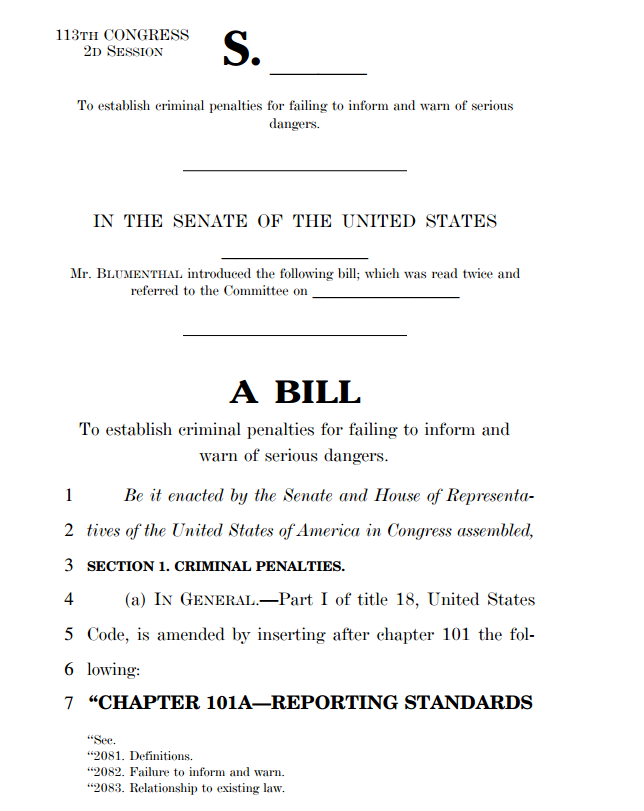
Senators: Make it crime for auto execs to hide safety issue


According to the Detroit News,
U.S. Sens. Richard Blumenthal, D-Conn., and Bob Casey, D-Penn., said Tuesday they will introduce the 10-page Hide No Harm Act of 2014Full article - make crime - auto execs who hide safety issues

A few key excerpts here. Article contains link to full text of bill.


From The Detroit News: http://www.detroitnews.com/article/20140715/AUTO01/307150090#ixzz37bDpxmxl

Friday, July 11, 2014

Report from the edge of northern West Bank


We left Sdorot yesterday and are now staying in a house overlooking the broad dun-colored hills of the northern West Bank. The quiet envelops the hills. In winter, this is a place of nomadic goatherds. Now, hot and silent.
We are still targets, though. All in Israel are targets.
In February, the Times of Israel's David Horovitz detailed Hamas’s much improved missile capabilities, and its use of underground tunnels. “Hamas has also committed considerable resources to the construction of a substantial network of tunnels — dozens of miles of underground networks in key areas of the Strip — which will immensely complicate future military confrontations for Israel,” he wrote.
“Hamas will use the tunnels to plant mines targeting Israeli land forces, the Israeli military believes. It will use the network of tunnels to move its gunmen undetected from place to place during warfare. The Israeli military further anticipates that Hamas will fire rockets from underground launchers, making them far harder to detect and target. Moreover, the Hamas command and communication facilities will be located underground, enabling it to seek to maintain effective control out of reach of Israeli air power. Finally, the Hamas leadership, which the Israeli army said in the past had taken refuge in underground bunkers beneath hospitals and other civilian facilities, will also utilize these more-sophisticated underground facilities.”
Israel continues to supply electricity, food, and water to Gaza, as well as medical treatment to any Palestinians in need (on July 8 alone, 80 Palestinians crossed from Gaza into Israel and were admitted in Israeli hospitals).


Thursday, July 10, 2014

Report from Sderot - II


These are the missiles that are being launched specifically at civilians from underground pits located around 3 or 5 miles from my home in Sderot.
The missiles lined up here were captured by the Israeli navy before making their way from Iran to Gaza, but our security people say that many more of them got past and got into Gaza, and they are being shot at our cities now.

They are much too big for shooting at Sderot, but are shot northward toward Tel Aviv. We are still being fired on with smaller rockets.


This is the scene in northern Gaza, around 2 miles from my house. 
Did they do their geometry homework? Not as well as our guys did.

Thankfully these are intercepted most of the time by the Iron Dome defense. As we were running for cover today, my son Moses was amazed to see one of the Iron Dome rockets ascending right over our heads to make an interception. We are very proud of the embedded systems experts who have programmed these intercepting rockets so perfectly.


Today the war got a lot more unnerving with not only the fire from both sides, and the sound of the bombing a mile away, and the smoke everywhere, but we also heard the helicopters hovering loudly overhead, bearing down with their payloads of death, and that became too much for my nerves, while we had to run into the bomb shelter around 30 times in the last three days. Also there is an overpowering intense energy of fatal conflict where both sides are prepared to fight to the death. It is a wild and horrifying energy that hangs in the air there now. Sweating soldiers and men on both sides of the boundary, each hell-bent on stopping the other from doing what each is hell-bent on doing. Tanks are assembling on this side, while in Gaza it is certain that they are preparing millions of booby-traps. I am not being too poetic here. War is hell.

So we are evacuating Sderot, or we could just say, driving away in my beat-up Fiat, and going somewhere quieter.


Dear Mr. Nolan, Ms. Gilford, and Mr. Minnick, Thank you for the subpoena : )


Dear Mr. Nolan, Ms. Gilford, and Mr. Minnick: (Skadden, Arps, Los Angeles)

Thank you for the subpoena. I received in on June 28 by email in good order. I look forward to working with you to establish the truth.

However, it has been quite a challenge to find suitable local counsel there in California at such short notice. Fortunately, I found an excellent attorney and am just now working to finalize the terms of our engagement. However, I think that by the time our engagement is finalized, I will miss the deadline for submitting a response to the document requests attached to the subpoena. Therefore, I ask that as a professional courtesy you grant me a ten-day extension on the deadline for that submission, which would allow a proper response with the input of counsel. I am sure that it will also be in your interest to receive a properly formulated response so that we can move forward expeditiously.

Please let me know if you will accept this request.

With kind regards,
Betsy Benjaminson
(you may call me Betsy) 
(or maybe "rogue." )

Coming up: Legal defense fundraising. How interesting that will be.

Wednesday, July 9, 2014

Wikileaks evaluates corporate behavior as if a corporation were a country


From Wikileaks

Corporate corruption comes in many forms. The number of employees and turnover of some corporations exceeds the population and GDP of some nation states. When comparing countries, after observations of population size and GDP, it is usual to compare the system of government, the major power groupings and the civic freedoms available to their populations. Such comparisons can also be illuminating in the case of corporations.
Considering the largest corporations as analogous to a nation state reveals the following properties:
- The right to vote does not exist except for share holders (analogous to land owners) and even there voting power is in proportion to ownership. 
- All power issues from a central committee. 
- There is no balancing division of power. There is no fourth estate. There are no juries and innocence is not presumed. 
- Failure to submit to any order may result in instant exile. 
- There is no freedom of speech. 
- There is no right of association. Even romance between men and women is often forbidden without approval. 
- The economy is centrally planned. 
- There is pervasive surveillance of movement and electronic communication. 
- The society is heavily regulated, to the degree many employees are told when, where and how many times a day they can go to the toilet. 
- There is little transparency and something like the Freedom of Information Act is unimaginable. 
- Internal opposition groups, such as unions, are blackbanned, surveilled and/or marginalized whenever and wherever possible.
While having a GDP and population comparable to Belgium, Denmark or New Zealand, many of these multi-national corporations have nothing like their quality of civic freedoms and protections. This is even more striking when the regional civic laws the company operates under are weak (such as in West Papua, many African states or even South Korea); there, the character of these corporate tyrannies is unregulated by their civilizing surroundings.
Through governmental corruption, political influence, or manipulation of the judicial system, abusive corporations are able to gain control over the defining element of government the sole right to deploy coercive force.
Just like a country, a corrupt or unethical corporation is a menace to all inside and outside it. Corporations will behave more ethically if the world is watching closely. WikiLeaks has exposed unethical plans and behaviour in corporations and this as resulted in recompense or other forms of justice for victims.

Tuesday, July 8, 2014

Report from Sderot


As you readers may be aware, I live in Sderot, Israel, a town of around 20,000 located around one mile from the border with northern Gaza. This town is famous for how many missile strikes it has absorbed in the decade since Israel withdrew from its Gaza settlements. I think the count is 10,000 missiles.

While larger missiles are destined for bigger cities farther away, we are close, so we are targeted with smaller weapons--typically home-made "kassam" rockets that are welded together in small Gaza workshops, packed with explosives and metal, and then launched across the border right at the homes of civilians here. Outside my apartment are large pockmarks on the street where a couple of these have landed. The facade of my apartment building bears the scars of the shrapnel. (Channel 2 news captured a few of these in their Ulpan Shishi piece about me.) And my living room ceiling bears a round patched hole, testimony to some rocket that pierced the ceiling in the years before I moved in.

After each missile strike, the police come to collect the remnants, which they store on metal racks behind the local police station. There are thousands, the racks are groaning with them. But we are blessed with miracles that these rockets have not killed all that many people in town, because we all scurry for shelter when we hear the red alert warning of a incoming rocket. The situation is improving by technology. There is now a smartphone app that can also sound the red alert. And we have a wonderful missile defense system called Iron Dome that shoots down the incoming rockets. Each of these defensive missiles is launched to intercept a "kassam" before it lands. We hear a pretty big boom, but that's it. Each individual shoot-down missile costs $40,000, it is said. The electronics are expensive. But to save life and limb, we spend that amount many times a day these days.


Iron Dome at work  - example of advanced and reliable life-saving electronics


We are now about to begin a major defensive war. I hope that peace-loving people of Gaza will eventually prevail so that we can live in peace again. My heart aches for the mothers there. Meanwhile, though, we carry on and do what we need to do in our defense.

Programmer analysis of Barr's findings: Toyota Code Could be Lethal

Cause for Toyota UA (humor)


Report about visit to US Congressional staffers in October, 2012


October 6 2012
Brooklyn, NY
Here is an unpolished draft of some facts and opinions after four days of meetings with Congressional staff on the Toyota UA issue. I went to see them when they invited me to bring experts to try to validate the evidence I’d provided.
Generally it was a failure, and I guess and wonder about Toyota’s lobbying forces working in opposition behind the scenes. I am a rank amateur without the benefit of perfect evidence, up against the most professional and cunning lobbyists.
However, the game is not over, not by a long shot. There will be plenty of opportunity during the trials and/or with others coming forward, or in the aftermath of more crashes. Now this also amounts to Senator Grassley joining the House and others who those who know of this problem in detail but choose to do nothing to solve it. This group has already included Toyota itself, individuals who know the inside story, the industry, the watchdogs, NHTSA, and in some sense also NASA for going along with NHTSA’s program and not making its scientists’ objections public. So any coverage of the “bad guys” can include members of both the House and the Senate under whose direction the staffers work.
I suspect that the background issue of the pending litigation caused some concerns among the staffers, who cannot be seen as supporting claims usually associated with Democrat notions of consumer protection/more regulation/corporate expose, risking possible job loss at the corporation. This is totally illogical, because the cost of car crashes to the economy runs into the hundreds of billions of dollars every year, not to mention the huge human toll, and the litigation is also a monstrous waste of national resources.

The meetings were as follows:
Tuesday am – Hannemann with House Energy and Commerce staffers. The staffers admitted they could do nothing unless some dramatic insider testimony or some new evidence came their way. The Toyota internal documents were not enough, even with expert backup. Theoretically they could compare the internal docs from me with what Toyota produced to them, but they are in the minority and a comparison would be very expensive. I heard a rumor that Toyota has hired away a staffer who used to work on that investigation, and she is keeping tabs on what goes on there now.
The rest of the meetings on the Hill were with Sen. Judiciary Cmte staff
Tuesday pm – Hannemann—he said to me that he saw in the documents evidence that T knew of electronics related UA (and of course had not admitted that at any time.) To the staffers he also explained this, and highlighted the document evidence of Toyota's global problem—evidence that does not seem to have been available to Neil when he worked as a consultant to the House in the past.
Wednesday pm Dr. Gordon Davy and his tin whiskers whistleblower daughter Lisa. Gordon said there is no question that NHTSA is “derelict” in not performing its duty to the public, and that in one document he found evidence that Toyota was lax its approach to handling tin whiskers risk—they did not bother to prevent the risk by coating the item, but instead just conducted lab tests to see if the whisker growth was less than some arbitrary amount that they set as the upper limit. Separately he said to me that the company was definitely negligent because it marketed a product that contained a known danger (pure tin) without taking reasonable steps to prevent or mitigate the risk.
Gordon proposed that the solution to the problem was to either privatize the auto safety certification function or to expand the FAA to also include cars because the FAA is a strong and effective regulator of aviation safety. Gordon is brilliant. He offered some great solutions based on his deep experience in industry. His many contacts in the engineering world may also band together to write letters and take other steps to help advance awareness of the dangers of tin whiskers and the crying need for better regulation of the auto industry in general and regarding tin whiskers risk mitigation in particular.
Thursday pm Bill Rosenbluth and his wife Jean
Bill presented some compelling technical evidence that, as far as I understood it, proved that there is a layer of EDR data behind the data that Toyota wants anyone to see. Bill is able to collect and download that data from EDRs and finds all kinds of things in it, and according to Jean, Toyota “hates” him because all they want anyone to see is the small subset of the real data. He also gave a detailed explanation and case study of how EDR data is fundamentally unreliable and how Toyota has been uncooperative with families of victims by not providing the tool to read out the EDR after a crash. The case presented, the Eves fatal crash in the pacific northwest, involved a single-vehicle accident of a truck hitting a tree in which the EDR recorded data was physically impossible.
We discussed the role of the MDL in correcting this failure of regulation. The staffer said that the MDL plaintiffs will be able to fund a thorough technical investigation after which Congress will sit up and take notice of large settlements or judgments and will do something afterward to fix the regulation. This really pissed me off because he is not taking into account all the untold suffering of the victims and the enormous wasteful effort of all the plaintiffs and the defense in the litigation. To me this sounded like a close echo of the position of the automakers. When I heard this I thought we are really dealing with a Republican mentality. So after this, which he said on Wednesday, when Bill demonstrated Thursday his download of the EDR, I asked if he did this when people died, or if he did this any other time. The answer was, when attorneys asked. Attorneys only get involved if there is a death or severe injury. And it cost $10,000, he said. So this puts plaintiffs in a position of having to pay for experts along the way, during a case.
These comments sounded just like Toyota. The playing field is just as tilted in Toyota’s favor in court as it is on the Hill.
Friday am Dr. Antony Anderson
Dr. Anderson presented a compelling story of the history of electronics-based failures, lack of safety standards for cars, horrifying videos and photos of runaway cars from around the world, and videos of Ray LaHood saying there is nothing wrong with Toyota’s vehicle electronics, in direct contradiction of the actual study findings.
Dr. Anderson brought sample CTS pedals that had manufacturing defects in several places, including holes that might result in “sticky pedal” for reasons other than those publicly claimed by Toyota, as well as evidence of shoddy manufacturing of the APPS (Accelerator Pedal Position Sensor) assembly.
Dr. Anderson also showed photographs of the Eves EDR box and circuit board that contained evidence of electrical arcing that may have occurred when the truck hit the tree, and which may likely have caused an erroneous data recording that was physically impossible, as had been described by Bill Rosenbluth.
There was also an extended discussion of wrongful imprisonment of drivers whose cars were out of control and had killed people. The Lee case was mentioned. The Mary Hill case was mentioned. Mary Hill remains imprisoned in Florida after having been sentenced to 15 years when her car went out of control and killed two girls. Perhaps she could be interviewed?
Dr. Anderson pointed out a very weak and obsolete point in the law that he understood from his perspective as an expert witness in many UA civil cases and in one criminal UA case. That is, he said the law assumes the driver is in control of the car, but in many cases of vehicle electronic glitches, the car does not do what the driver wanted. In actual practice, this puts the driver in the impossible legal position of being responsible for the behavior of a vehicle that the driver cannot completely control. The staffers responded by saying that in a criminal case, the defense could establish reasonable doubt about the driver’s culpability. Dr. Anderson later commented that first, it is expensive to do so, and there are few experts available who could credibly testify about intermittent or one-time electronic cased vehicle behavior that leaves behind no physical evidence. Courts rely too heavily on traditional rules of evidence that require physical evidence of a defect, but electronic defects often leave no evidence behind, and thus the driver tends to be blamed.
Dr. Anderson also pointed out the difficulties of requiring repeatability in proving UA events. The events need not be repeatable because the sheer number of possible failure mechanisms makes it impossible to find the exact cause in a majority of incidents. Toyota engineers have agreed with Dr. Anderson in their recorded interviews with House staff and in internal memoranda.
Meanwhile on Wednesday am, Gordon Davy, Lisa, and I went to NASA Goddard Space Flight Center in Greenbelt MD and met Dr. Henning Leidecker and Dr. Norman Helmold who indicated their concerns that the NASA study was not scientifically sound. Both of them have worked as senior level failure analysts for many years. Henning’s specialty is tin whiskers.
The concerns with the study were with the small sample sizes, lack of samples of failed pedals, vehicles, or other components, and no data to analyze. They seem to have numerous other concerns that remain unexpressed. Dr. Leidecker was on the study team that he asked to be put on, and the team leader agreed without enthusiasm. He was sometimes excluded from meetings.
Dr. Leidecker indicated that the path forward involved more thorough engineering failure analysis and probability studies using a proper sample of many pedals. I asked him if he would like a huge box of, say, 1,000 pedals and he responded agreeably, with enthusiasm, and said that would enable him to predict the probability of failure and to publish his findings. That would cost so little money! I wonder what neutral funding source could be secured for such a project.
Someone who lobbies for a highway safety advocacy group explained to me that the reason this is going to be stuck in the Senate is that NHTSA administrator David Strickland used to work for Rockefeller, the chair of the Senate Commerce Committee. Senator Rockefeller is from W. Virginia, where he got Toyota to build an engine plant. So the Senator does not necessarily want to do anything to embarrass his former employee or his patron. Separately I had heard that information provided to that Committee is likely to be shared with Toyota.
All this palace intrigue is emotionally exhausting to watch from an uninvolved position, but far worse to observe as a participating unpaid volunteer when lives are at stake. I have now seen directly, as far as the feedback I’ve gotten from the staff, that an expert-verified universal safety issue affecting every American driver is less important that those relationships…and I tentatively and sadly conclude that members in Congress care more about their political fortunes than they seem to care about the welfare of the people, and do not have the capacity to proactively fix problems. Rather we must wait for them to react to some scandal or disaster. I had hoped to make a scandal with Congress for this reason but don’t seem to be able to, so much work with media to do it and press Congress to do it.
When people advocate tort reform they are also often advocating regulatory rollbacks. Softer regulations lead to more torts. And tort reform leads to lower compensation for victims. I think these people will continue this way until some tort happens to them.  

Sunday, July 6, 2014

"If you knew what kind of documents were withheld in a high stakes civil case, it would blow your mind away."


Here is a quote from
"Mississippi Lawyer" in a JD Underground comments thread on the topic "Betsy Benjaminson."

mississippilawyer (Oct 26, 2013 - 5:18 pm)

not picking at you, op, but are you so naive as to think that nearly all defense lawyers dont do the same thing? If you knew what kind of documents were withheld in a high stakes civil case, it would blow your mind away. The game is "hide the ball and catch me if you can."

I found this comment very interesting. Just someone's anonymous opinion, though.

The whole thread can be found here:
Betsy Benjaminson: Whistleblow on Law Firms

Meanwhile, the mighty judge may say, and he may think it is true that:

IN THE JUDICIAL PROCESS IN THE UNITED STATES, THERE'S GREAT POWER IN THE COURT TO FORCE ANY PARTY TO PRODUCE RELEVANT MATERIAL.  IT DOESN'T MATTER HOW
HIGH IN OFFICE, OR STATURE THAT PERSON IS; OR HOW LARGE OR POWERFUL THE CORPORATION IS.  THE COURT HAS THE POWER TO TELL ANY CORPORATION -- AND THE CORPORATION IN THIS CASE -- TO PRODUCE ITS MOST SENSITIVE MATERIAL.

Is this actually true? 
While a court may think it forces production of sensitive material, do corporations really produce all of their most sensitive material? 
And do corporations have an inherent right to maintain confidentiality of their produced materials despite a significant and proven risk to the public?

Monday, June 30, 2014

NDAs seen as increasingly lethal weapons of corporate secrecy


Washington Post on illegal NDAs
Excerpt:
"Nondisclosure agreements traditionally have been used to prevent employees from going to competitors and taking trade secrets with them. But lawyers for whistleblowers say they are seeing a dramatic increase in the number of potentially illegal agreements employees are being asked to sign since the Dodd-Frank law went into effect.
Corporate America is becoming far more sophisticated and aggressive in its efforts to discourage people from coming forward and reporting externally,” said Jordan A. Thomas, who helped to establish the SEC’s whistleblower office as an assistant director there and now works for a New York law firm, Labaton Sucharow. One of his clients is the hedge-fund whistleblower.
Thomas said he has other clients who work for Wall Street firms that are under investigation by the SEC and were asked to sign overly restrictive nondisclosure agreements that prohibit or discourage them from cooperating with federal investigators."

Music break


"Check out....but never leave."

Hotel California - The Eagles


Sunday, June 29, 2014

Draft for book jacket - sneak preview


I started translating Japanese for Toyota in 2010. Cars were zooming out of control, and the company was under investigation. I discovered that insiders knew the root cause could be electronics, and that Toyota did not want the world to learn that fact. Fatal crashes were leading to lawsuits. But PR people and Mr. Toyoda said “Our cars are safe.” I was transfixed with horror at the blood on the road and the invisible menace under the hoods of millions of cars. Then I cast aside my fear of reprisals and leaked the translated documents, seeking justice for victims and protection for the public.


I built a network of engineers, lawyers, auto safety watchdogs, reporters, victims, and congressional staffers. Truth emerged in stages as Toyota retreated from bravado to silence and secret settlements. The cover-up drew a $1.2 billion fine from the DOJ even without the electronics. The conflict still rages behind the scenes. Defiantly, I filled a blog with dozens of revealing internal documents. Toyota is seeking to silence me now. What will happen next?

Saturday, June 28, 2014

rainmaking partner.


She says:
"I am a mother myself, and I had a hard time with the facts of that case."

I could say in response, "I am a mother myself, and I am having a hard time with the facts of these hundreds and thousands of cases, whether filed or not."

Thursday, June 19, 2014

Taxi driver unintended acceleration caught on camera - Korea

Link to LiveLeak dashcam video of real UA event


This event is said to have taken place in Korea, where dashcams are common.
Scary to watch. Pitiful sounds from car occupants after crash.

Monday, June 9, 2014

Mr. Crash


                                                             Net worth $1 billion. Nice.


                                                                        And?

Sunday, June 8, 2014

"Hot Jurisdictions" in Auto product liability, while Kevin Vincent speaks with forked tongue

This automaker defense conference just finished. See below for the conference program

Sean Kane was good enough to report on some of the remarks by NHTSA Chief Counsel Kevin Vincent, the very man who balked when I offered him some hot evidence that Toyota knew all about electronics defects that can cause SUA...because as Kevin's henchman attorney Matthew Weissman said, NHTSA cannot examine docs that automakers claim are attorney work product and attorney-client privileged.

First, Chief Counsel O. Kevin Vincent lulled them with a feel-good “rah-rah-ree” paean to industry. And then, he made the hair on the back of their necks rise: A manufacturer’s obligation to report a defect within five days of its discovery is the law, and after a long hiatus from doing its job, NHTSA intended to take “an aggressive stance” in enforcing it.
The first offense line in the discovery of a defect was not the Office of Defects Investigation, Vincent said. It was the manufacturers themselves.
“We don’t have analysts, but your clients do. You all have ability to find these defects,” he said.
A manufacturer cannot delay a defect finding, while a safety problem meanders through an internal process involving multiple committees. It cannot hide its knowledge behind a wall of attorney work product and attorney-client privilege. It cannot wait until it’s gotten the supply chain ready to implement the recall.

And it better not wait until after it settles a plaintiff’s case for big bucks. The TREAD Act obligated NHTSA to “follow up on civil litigation that sends up red flags,” he said. 

Very good Kevin. Walk the talk, OK? So far you aren't. Let me contact you today to see if you do as you say you will do. [contacted, today June 9, 2014. Left VM message with my phone number and details.]

And don't let the DOJ get away with the same nonsense you've presided over while you wait until some Big Law firm offers you an important job.

Meanwhile, the Omni Hotel's hallways, bars, and restaurant tables must have been a hotbed of in-house and outside counsel making cozy connections. How much money can they make in the process of defending automakers against consumer claims of auto defects? At least $500/hour, plus accolades and prizes for best defense lawyer, like Lisa Gilford. Fame and fortune await those lawyers willing to go to bat for automakers in court.

It must have been quite a scene of happy, well-paid lawyers whose financial interests align nicely with the existence of dangerous cars.


Automotive Product Liability Litigation

Expert Strategies for Singles-Out Vehicles and Media-Focused Issues

Wednesday, June 04 to Thursday, June 05, 2014
The Omni Chicago Hotel on the Magnificent Mile, Chicago, IL


Now in its 7th year, ACI’s lauded Automotive Product Liability Litigation conference is the highest-level national event on the market. It’s the only one that combines federal and state judicial insights and networking and business development opportunities with dozens of inhouse counsel from manufacturers and suppliers, all while allowing you to keep pace with the hot jurisdictions, case law, new and emerging parties, and advancements in technology. This year’s agenda has been revamped to provide you with strategic advice, critical insights, and comprehensive updates for:
  • Defending against typical defect theories: rollovers, side curtain air bags, fires, tire aging, electronic stability control, unintended acceleration, keyless ignition, and seat backs
  • Vehicle driver assist and sensor technologies, active safety systems, and autonomous cars: overcoming the product liability defense challenges and anticipating the future of claims
  • Incorporating the latest regulatory initiatives on safety and design of automotive products into your litigation strategy
  • Current battleground for automotive class action litigation including class certification, managing experts, pleadings, choice of law, and arbitration
  • Combating the recent rise in the filing of claims and class actions involving no-injury, consumer fraud, and warranties (express and implied)
  • How recalls are impacting class actions, litigation strategy to defeat class claims, recall-based Rule 23 arguments, and mootness
  • The latest nuances on the preemption defense and international personal jurisdiction and their impact on auto products liability cases
  • Effectively cross-examining experts and developing newer qualified newer experts
  • Ensuring confidentiality in the litigation of automotive claims, protecting work product in a discovery dispute, and using arbitration to your advantage

Saturday, June 7, 2014

Robert Reich: The Way to Stop Corporate Lawbreaking is to Prosecute the People Who Break the Law

Robert Reich: The Way to Stop Corporate Lawbreaking is to Prosecute the People Who Break the Law


WEDNESDAY, JUNE 4, 2014
Today General Motors announced that it has fired 15 employees and disciplined five others in the wake of an internal investigation into the company’s handling of defective ignition switches, which lead to at least 13 fatalities.
But who’s legally responsible when a big corporation breaks the law? The government thinks it’s the corporation itself.
Wrong.
"What GM did was break the law … They failed to meet their public safety obligations,” scolded Sec of Transportation Anthony Foxx a few weeks ago after imposing the largest possible penalty on the giant automaker.
Attorney General Eric Holder was even more adamant recently when he announced the guilty plea of giant bank Credit Suisse to criminal charges for aiding rich Americans avoid paying taxes. “This case shows that no financial institution, no matter its size or global reach, is above the law.” 
Tough words. But they rest on a bizarre premise. GM didn’t break the law, and Credit Suisse never acted above it. Corporations don’t do things. People do.  [emphasis added]


Thursday, June 5, 2014

National Law Journal, August 2013: Toyota Attacks Alleged Evidence of Accelerator Software Bug

Toyota Attacks Alleged Evidence of Accelerator Software Bug

Amanda Bronstad
The National Law Journal
2013-08-19
Toyota Motor Corp. has moved to strike evidence from a software expert who claims to have identified a bug in the electronic throttle control system source code that plaintiffs attorneys blame for unintended acceleration by Toyota vehicles.
Michael Barr, who specializes in embedded software programming, was deposed on July 3 in as a plaintiffs expert in the first bellwether trial of hundreds of cases pending in federal court .,,,,
Toyota moved on August 9 to strike Barr’s report, arguing that plaintiffs attorneys were merely attempting to improperly assert a new defect theory. Plaintiffs attorney Todd Walburg, in an August 14 response, insisted that Barr was merely supplementing his own testimony and that of another expert.

“Plaintiff’s source code experts have located the software bug in Toyota’s electronic throttle control system source code that explains why Mrs. Ida St. John’s 2005 Toyota Camry accelerated out-of-control from a stop sign,” Walburg wrote. “This software bug likely also explains the numerous other reported Unintended Acceleration incidents that have initiated at low speeds and when drivers are parking or stopped at an intersection.”

.........

Thursday, May 29, 2014

RAV4 crash into busy library


Driver not charged (yet) with RAV4 crash into library.
Click here for video


The blue object under the car is the leg of the pinned girl. Thankfully, she was in the hospital only one day, and has been released.

Tuesday, May 27, 2014

Michael Barr, embedded systems expert testimony excerpt

Here is what Michael Barr, who examined Toyota Camry source code for 18 months, had to say about Toyota's electronic throttle control software modules.


Thursday, May 22, 2014

Some words of advice for Toyota


When the next Toyota customer visits the dealer or calls in after an SUA incident, what should Toyota say?

How can I help?

I believe you.

I will find out.

Here's what happened.

You're welcome.


Wednesday, May 21, 2014

NHTSA's revolving door with auto industry-- a key factor in "see no evil" policy - example: Erika Jones went to Toyota


NHTSA has a long history of disgorging its top people directly into the auto industry or the industry's lobbyists, law firms, PR firms, or other helping hand companies. Here is a list of revolvers that appears in Sudden Acceleration: The Myth of Driver Error. Erika Jones appears on this list. She was one of the NHTSA attorneys who went to work for Toyota,  and she advised the automaker during the recalls crisis. Her name appears as a recipient of many of Toyota's internal documents. More later about Erika.


Tuesday, May 20, 2014

Sudden Acceleration: The Myth of Driver Error

Center for Auto Safety online bookstore


A thorough examination of how automakers have covered up SUA with a myth: that when a car takes off on its own, the driver always stepped on the wrong pedal and could always stop the car simply by applying the brakes. The authors show exactly how untrue this myth really is.
Here's a quote:


Tuesday, May 6, 2014

Toyota employee: A friend of mine in Rep. Blackburn's office gave me a heads up about a letter sent urging a safety investigation


It must be so nice to have friends in such high places; they tip you off when they are going to investigate you.


As U.S. Agencies Put More Value on a Life, Businesses Fret; DOT says "$6 million"


NYT article on the money value of a life

If $6 million is the value of a human life according to the DOT, why was Barbara Schwarz's life compensated at ony $1.5 million?

There must be some answer, but I don't know what it is.

After GM Disaster, Nader & Groups Call for Criminal Liability for Hiding Product Dangers

After GM Disaster, Nader & Groups Call for Criminal Liability for Hiding Product Dangers


News Release
For Immediate Release: Tuesday, April 8, 2014
For More Information Contact: Gary Ruskin (202) 387-8030
After GM Disaster, Nader & Groups Call for Criminal Liability for Hiding Product Dangers
In an effort to prevent deadly product safety disasters – such as the GM ignition switch failure — Ralph Nader, the Center for Progressive Reform and the Center for Corporate Policy called for enacting long-overdue criminal liability for product supervisors who know their products are dangerous or deadly, yet fail to tell federal regulators of these dangers.
Nader and the groups sent the letters today to the chairs and ranking members of the House and Senate Judiciary Committees, asking them to support legislation to require product supervisors to warn regulators and the public within fifteen days after a product danger is discovered, or immediately if there is an imminent risk of serious bodily injury or death.
The text of the letters follows.
Dear Senators Leahy and Grassley, and Representatives Goodlatte and Conyers:
This letter is a request that you introduce legislation to address fatal failures such as those by General Motors to warn the public and the National Highway Traffic Safety Administration (NHTSA) in timely fashion about ignition switch failures in its Cobalts and other GM models.  Such legislation is badly needed to ensure that such failures – and the deaths that come with them — do not happen again.
On February 13, 2014, General Motors announced a recall of about 778,000 of its cars due to an ignition switch failure.  That recall has now been expanded to nearly 2.5 million cars.[1]  At this time, the failure of the General Motors ignition systems is implicated in 303 deaths.[2]
Revealingly, nearly ten years before this recall, in November 2004, General Motors initiated an engineering inquiry to examine whether a 2005 Chevrolet Cobalt “can be keyed off with knee while driving.” In March, 2005 the Cobalt Project Engineering Manager closed this inquiry “with no action” because the “lead-time for all solutions is too long,” and the “tooling cost and piece price are too high” and that “[n]one of the solutions seems to fully countermeasure the possibility of the key being turned (ignition turned off) during driving.”  The Project Engineering Manager’s “directive” concludes that “none of the solutions represent an acceptable business case.”[3]
It is clear that this tragedy was mostly preventable if General Motors had properly warned NHTSA and the public at the outset of its documented suspicion of an engineering defect in its cars.
Several Members of Congress propose remedies for General Motors’ failure to warn NHTSA in timely fashion.  For example, Senators Edward Markey and Richard Blumenthal have introduced legislation requiring auto companies to provide NHTSA with key safety-related documents related to fatal auto crashes, including certain internal safety documents, insurance claims made against them, and information pertaining to lawsuits against them related to the crashes.[4]  The legislation would also require NHTSA to make this available to the public via the Internet.  Representative Henry Waxman has introduced legislation to require auto manufacturers to disclose additional information about fatal crashes, NHTSA to provide public notice of inspection and investigation activities, and auto manufacturers to have a U.S.-based senior executive certify the accuracy and completeness of responses to NHTSA’s requests pursuant to safety investigations.[5]
These approaches have merit within the context of auto safety, but they are inadequate because they address merely a narrow segment of the broader scope of the problem.  Thus far, Members of Congress and the media have largely viewed this General Motors ignition switch defect as a matter of auto safety.  Of course, it is that.  But it is so much more.
The General Motors ignition switch defect is the latest example of a grievous tradition in the history of multinational corporations: the failure to warn U.S. regulators of deadly product defects. This tradition includes, among many other tragedies, the Dalkon Shield, Ford Firestone tires, cigarettes, asbestos, Guidant heart defibrillators, Bayer’s Trasylol, Ford Pintos and Playtex Super-absorbent tampons, to name a few.  In March, an FBI investigation revealed that Toyota misled the public about one cause of unintended acceleration in some of its cars, and tried to hide a second cause from NHTSA.
This is the correct context in which to place the current General Motors ignition switch defect.
The failure to warn is a problem that potentially afflicts most manufacturers, not merely the auto industry.  Only a systematic solution will fix this systematic problem.  A good solution must be broad in scope.  The best solution lies in establishing incentives to strongly predispose corporate officials to promptly disclose product dangers to regulators and the public.
In the 111th Congress, Rep. John Conyers introduced the Dangerous Products Warning Act,[6] which would require companies to warn employees, consumers and the appropriate federal regulators of any product or service that poses a serious danger to the public. The legislation would create criminal liability for product supervisors who knew of serious dangers but failed to warn federal regulators or affected parties.  Under this legislation, such warnings must be made within fifteen days after such discovery is made, or immediately if there is an imminent risk of serious bodily injury or death.
Such legislation would have saved countless American lives and prevented many injuries during the last fifty years, probably including those who died or were injured from the General Motors ignition switch defect.
We strongly urge you to introduce the Dangerous Products Warning Act in the 113th Congress, and to work diligently for its passage.
Sincerely,
Ralph Nader
Rena Steinzor, President, Center for Progressive Reform
Gary Ruskin, Director, Center for Corporate Policy
Nader and the groups sent the letters to Senator Pat Leahy, chairman of the Senate Committee on the Judiciary; Senator Chuck Grassley, ranking member of the Senate Committee on the Judiciary; Representative Bob Goodlatte
The full text of the letters is available at: http://www.corporatepolicy.org/2014/04/08/after-gm-disaster-nader-groups-call-for-criminal-liability-for-hiding-product-dangers/
-30-


[1] Christopher Jensen, “G.M. Recall Total in 2014 Reaches 4.8 Million.”  New York Times, March 29, 2014.
[2] Danielle Ivory and Hilary Stout, “303 Deaths Seen in G.M. Cars With Failed Air Bags.”  New York Times, March 13, 2014.
[3] Majority staff, House Committee on Energy and Commerce, “Hearing on ‘The GM Ignition Switch Recall: Why Did It Take So Long?’” March 30, 2014.
[4] S. 2151, the Early Warning Reporting System Improvements Act of 2014.
[5] H.R. 4364, the Motor Vehicle Safety Act of 2014.
[6] H.R. 6544.  It was re-introduced in the 112th Congress as H.R. 322.  See also Matthew L. Wald, “Spurred by G.M. Recall, Senators Push for Better Auto Safety Reporting.”  New York Times, March 25, 2014.